Showing posts with label movies. Show all posts

Friday, October 9, 2015

The Zombie Movies of George A. Romero

It's October! Time to celebrate the Halloween season with this article I've been working at off and on since April! Join me as I detail the rise and fall of the man who invented the zombie as we know it.

Night of the Living Dead (1968)

What's curious about the influence of Night of the Living Dead is that its production values have become just as definitive as its content. The very concept of the living dead was born from budget restrictions, which set the theme for the entire production. This was a movie shot with whatever Romero could get his hands on, and for that reason the whole affair remains grounded in a terrible reality no matter how surreal the proceedings get.
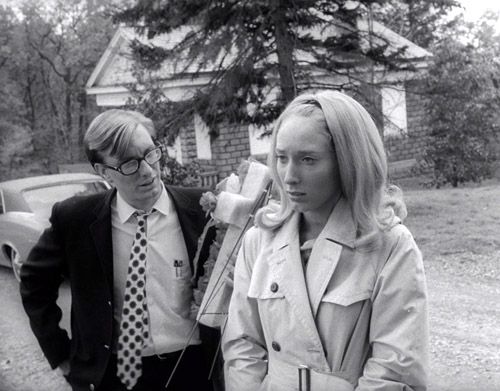
Johnny and Barbara

Night of the Living Dead does more with less than any movie I can think of. The entirety of the film (minus footage shown on TV) takes place inside of perhaps one square mile. We start with a car pulling up to a cemetery, where a brother and sister (who don't much care for each other) leave flowers on a grave of a relative they don't seem particularly interested in. Johnny realizes that being around so many dead people scares Barbara and picks on her before being assaulted by a zombie. Barbara runs.

All of this unfolds in less than ten minutes. We've been introduced to a setting and three characters (not counting a snippet of radio broadcast), and yet we've been given a sense of both what this world is like and that something very unexpected and wrong has just happened. All of this spools out in black and white, a production decision I believe was born of the same budget restrictions that inspired the zombies themselves and would lead to the use of chocolate syrup in lieu of blood later on.
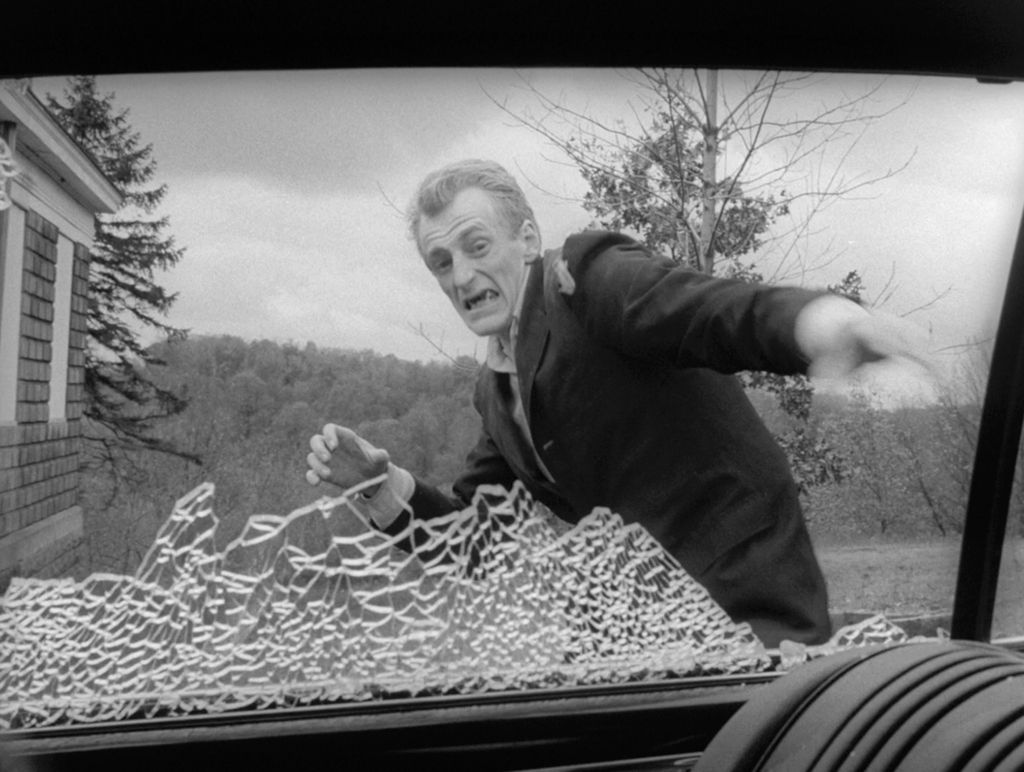
Bill Hinzman, the first Romero zombie

The first zombie in the cemetery, Bill Hinzman, is incredibly iconic, which is why it's so strange that he acts almost nothing like Romero's later zombies. Remember that the people making this film had never seen what we'd consider a zombie movie because those types of movies didn't exist yet. Despite the fact that Romero zombies are considered "slow," since the mode of locomotion most associated with them is a kind of shambling shuffle, Hinzman runs, in a strange, loping gate that suggests both of his legs have gone to sleep.

Babara's escape is remarkable in and of itself for how many cliches it contains. We get the rumble of thunder and the flash of lightning as Hinzman looks up from the fallen form of Johnny, even though it never rains or even continues thundering. We get to see Barbara screw up her escape by slipping out of her shoes and falling down. She gets to the car and then can't start it, because Johnny had the keys, so she lets the parking brake out and rolls down the hill into a tree. Finally, she makes it to a nearby farmhouse just as the sun sets. (And the sun sets hard, going from midday to twilight to night in the space of perhaps a minute. As noted in the Rifftrax - see below - "the sun didn't set, it crashed.")
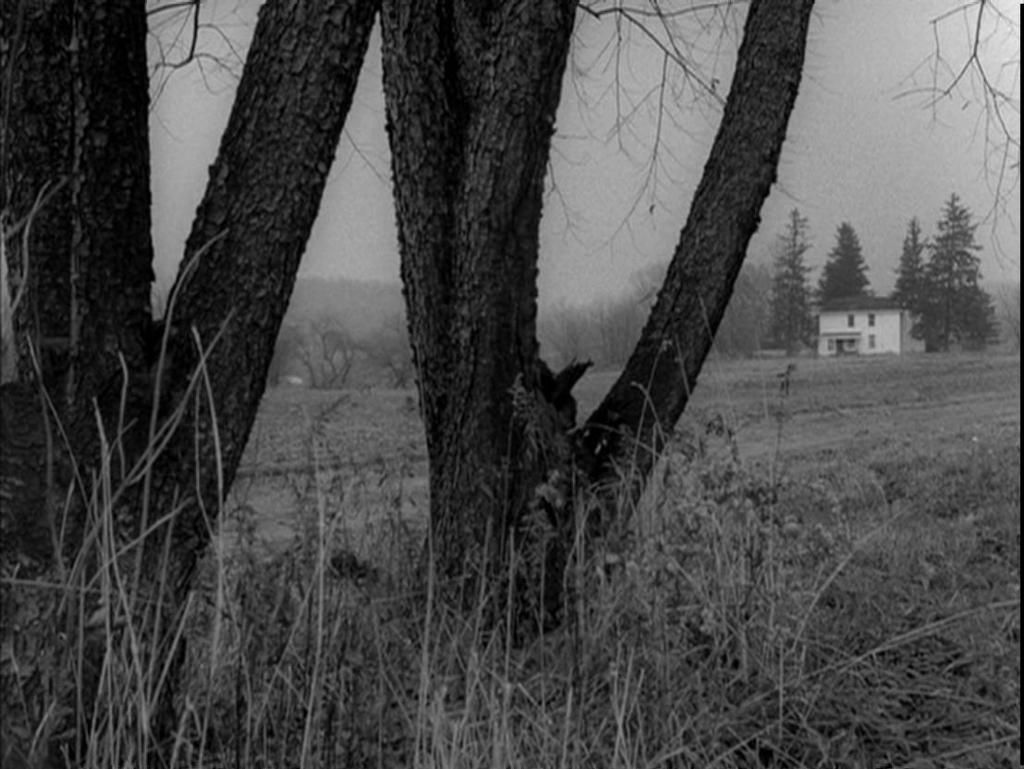
The farmhouse

The rest of the movie unfolds at the farmhouse, where a strange ensemble arises (a number of people turn out to be hiding in the basement). Barbara meets Ben, who rolls up after nightfall just as her nerves hit the breaking point. Barbara is one of the most helpless women ever depicted on film - she spends the rest of the movie semi-comatose in shock - but Romero almost makes up for it in Ben, who is black.

The part of Ben, who is the closest thing Night gets to a hero, wasn't specifically written for a black man; Duane Jones was just the actor who impressed Romero most with his audition. And it's interesting to watch the movie with that in mind, because it is never actually mentioned that Ben is black, trapped here in a farmhouse full of scared white people in 1968. This is important, because much of the movie's second act is a series of arguments between Ben and an older man named Harry Cooper, and it's never really clear if Cooper dislikes Ben because he's black, because he's young, or simply because Cooper is naturally a dick to people.

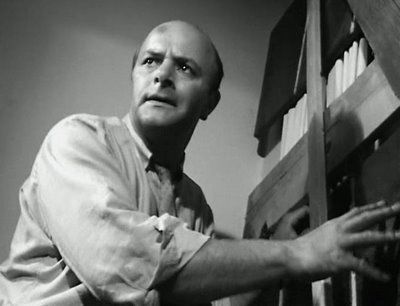
Ben (top) and Harry Cooper

Night of the Living Dead thrives on the things it doesn't pin down. The biggest one is why the dead are returning to life. Some speculation, shown in an emergency TV news broadcast the survivors watch, is that it has something to do with a probe to Venus that was destroyed on reentry to Earth because of anomalous radiation. The probe doesn't get mentioned a whole lot, and isn't mentioned at all in any of the sequels, because Romero's guiding thought in creating zombies was actually quite simple. According to him (in an interview in Birth of the Living Dead, see below), zombies were simply a representation of what would happen if things suddenly changed.

Famed as the birthplace of the modern zombie, Night is just as important for what it doesn't establish: the zombie apocalypse. The film's ending is so incredibly bleak that one could be forgiven for forgetting that the humans are actually shown winning at the end. Night of the Living Dead basically invented the zombie genre, but in doing so never really gets the chance to inhabit it. That honor would fall it its sequel.

If you liked Night of the Living Dead, try....
  • An excellent primer exists in the form of Birth of the Living Dead, a 2013 documentary on the film's origins and production history. It's a good place to start if you've already seen the movie and want to know more.
  • Considering its status in the public domain, it's a shame that Night has never received a proper comedy dub. An effort was made in 1991's Night of the Day of the Dawn of the Son of the Bride of the Return of the Terror, but not much of one. The (very loose) premise is that the zombies are actually disgruntled workers just getting off shift, and the survivors pick somebody to go outside in search of pizza. The humor is too harsh and rambling to really make for an effective theme comedy; a good example is a running joke that goes nowhere about Barbara (dubbed in falsetto by a man) hearing a duck in the distance and being unable to locate it.
    • Still, one spectacular joke almost makes it worthwhile. When the sheriff comes up to the burned-out truck in the film's closing minutes, he eyes it considerately and sagely mutters, "I've seen this kind of thing before. It's a truck."
  • A somewhat-better stab at comedy comes in the form of the RiffTrax cover, but considering its pedigree (RiffTrax is run by many of the former stars of Mystery Science Theater 3000, as its website's header text helpfully explains) I had hoped for better. This one is basically Mike talking to himself, alone, which is a downer so big I was never completely able to enjoy the jokes. Movie mockery is supposed to be a group activity, dammit.

Dawn of the Dead (1978)

Dawn of the Dead has one of my all-time favorite movie openings, magnificent in its garish simplicity. The camera opens up on a section of carpet that is so orange it is nearly fluorescent. Viewers' eyes get perhaps a second or so to adjust to this, and then there is a loud synth power chord as the movie's title comes up. Welcome to the end of the world. It's 1978.
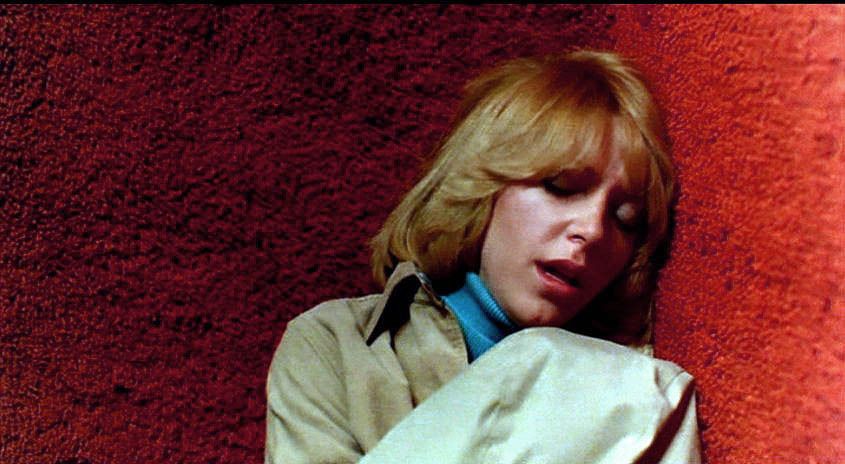
Frannie, swaddled in the comfort of 1978

Romero has a strange relationship with continuity. It isn't that he doesn't care - there's a great sequence of a zombie getting murdered with a screwdriver in Dawn that only exists to explain why a character is wearing a jacket in some (already filmed) shots and not others - but Romero decided not to pick this fight. Night of the Living Dead looks entirely like 1968, and Romero decidedly to simply accept that a decade had passed between it and this first sequel, trusting that audiences would do the same.

As covered in Birth of the Living Dead, George Romero's career immediately before becoming a filmmaker was in television. He shot segments for Mister Rogers' Neighborhood (of all things) and did commercials. As such, it's kind of appropriate that Dawn opens in a TV station (that hideous red-orange carpet is actually on the walls). The first character we meet is Frannie (Gaylen Ross), who awakens to find that civilization is disintegrating.

It's hard to say whether more of the madness in the studio of WGON is unfolding in front of the cameras or behind them; the impression we get as Frannie walks out into the control room is that regard for order has completely lapsed. Production people are arguing with on-air talent. Curse words, strangely absent in Night, abound. Nobody knows anything and everyone is mad about it.
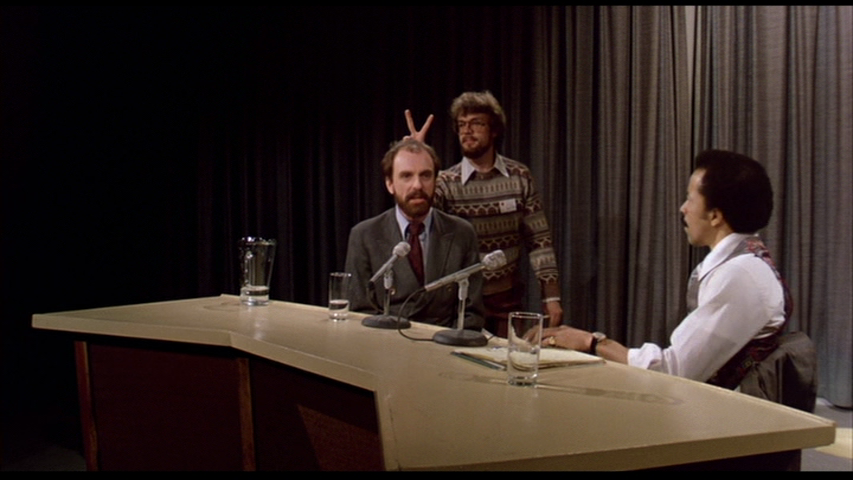
A WGON emergency broadcast

The only real clue to a timeframe we get comes in this scene; we hear a man yelling about the situation of "the last three weeks." This seems about right, even if Night takes place explicitly in the spring and Dawn implicitly in late fall. The zombie problem is clearly causing people to doubt the structural integrity of civilization, and even as she watches people in suits tear each other down verbally, Frannie is taken aside by Stephen (David Emgee), her boyfriend and the station's helicopter pilot, and told to meet him on the roof for escape later that evening. The only person who overhears this conversation, a blase camera operator, tells her that it's fine if she goes because the station will switch over to an emergency feed at midnight. "Our responsibility is finished," he tells her with chilling disinterest.

Again, Romero's economy of style is deceptive: We've just gotten a very visceral feeling for the zombie apocalypse without ever seeing a zombie or, in fact, leaving the confines of the TV station. Suitably primed, we change venues to a tenement block being cleared by the National Guard elsewhere in the city.

The first zombie in Dawn of the Dead

As Romero reiterates many times on the DVD commentary, the zombies in Dawn - which are first encountered in this tenement building - look the way they do in part because of lighting. Despite consistent application of gray makeup, the zombies photograph as blue or green or pallid white depending on the conditions, making for a good thematic match with the lurid fake blood used. Strangely, the first zombie in this movie - a bloody mess in contrast with Hinzman - is both more shocking and less memorable, appearing only briefly, thrashing around on a linoleum floor. One guardsman tells another to shoot the thing; the first guardsman instead shoots himself.

James A. Baffico, who plays a guardsman named Wooley elsewhere in this scene, delivers what is probably the most kinetically bad performance I've ever seen committed to film. Wooley's dialogue is a wall of fast-paced racial slurs and general put-downs spat out with near-unvarying disgust. There is nothing even remotely real about Baffico's performance, and yet it works, fitting the frenetic action perfectly. The body count in this scene is staggeringly high, showcasing what an easy thing humanity is to lose.

Roger (a SWAT member and a friend of Stephen's) has seen enough. By the end of the raid, he and another cop, Peter, know that the fight is unwinnable. They join Stephen and Frannie in an escape into the Pennsylvania night.
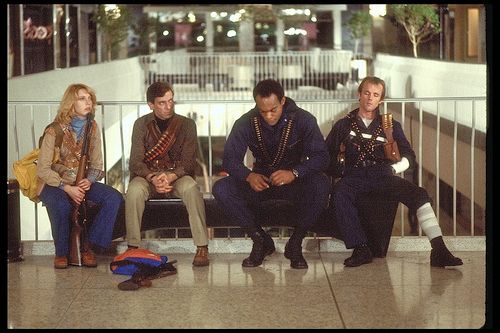
The main cast (from left); Fran, Stephen, Peter and Roger

Peter (Ken Foree) is black, and unlike Ben his blackness is part of his character. Romero says on the commentary that he specifically wanted to create another strong black character, and in Foree he found an actor who could play strength with nuance. Peter is both the smartest and the most self-aware of the four. Though the three white leads are never hostile to him, there's a feeling, as he boards the helicopter with them, that they don't know how to interact with a black person, and that he's been in this spot before. The awkwardness is mostly brushed away, though, and they carry on.

Low on fuel, they land the following day on the roof of a massive, deserted shopping mall. Although their stop is initially supposed to be temporary, the survivors end up finding the mall too good a prize to give up. They set up a living area in a storage space and get reports on the disintegration of the outside world. The revolution is, in fact, televised.
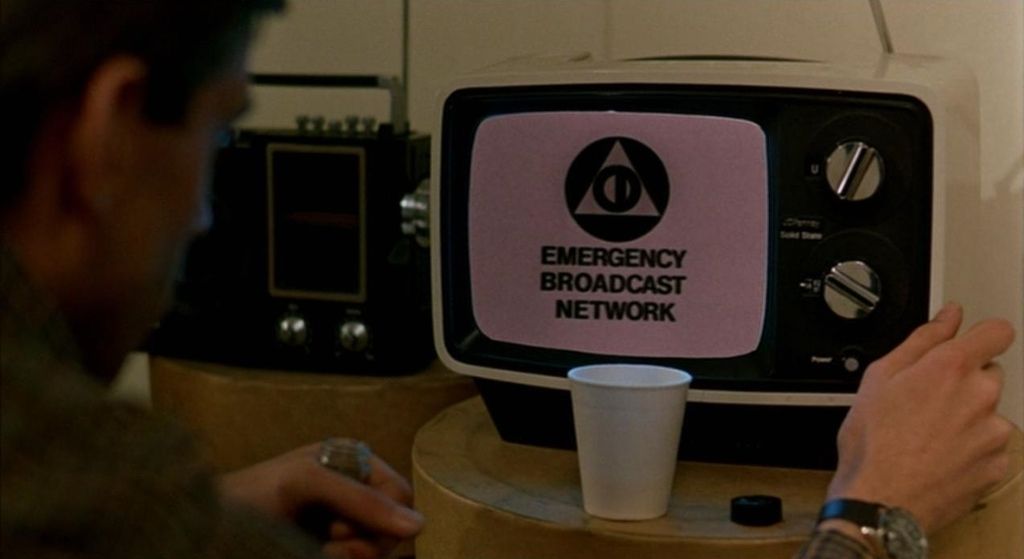
Stephen, watching a Civil Defense broadcast on a modest portable TV

The second half of the movie unfolds with ever-slowing pace. This is the part of Dawn that's entered to popular consciousness: sitting out a zombie apocalypse like it's a snow day. Dawn of the Dead is consumer satire at its most blunt: the survivors while away the hours as the days run together. The characters end up subject to ennui, with the unspoken paradox that their lives are both extremely precious and yet entirely meaningless.

The consumerism-skewering angle is helped by how badly all the physical goods have aged. The group's living space ends up adorned with the ritziest gear around, but that just means things like a top-loading VCR and a futuristic chair that gets sat in while still in the packaging. Their TV is a huge-for-the-era CRT model with all the design flare of a microwave oven. The clothes aren't much better, especially when being shown off by dead-eyed mannequins.

Dr. Rausch, on a much nicer color TV

On TV, Richard France (playing a man who is credited as "Scientist" in the film but sometimes externally as "Dr. Millard Rausch") keeps up the call for urgent action, but he's met with the same in-studio resistance as in the opening scene. (Oddly, we never get a good idea of where he's broadcasting from; his final transmission appears to be coming from a storage room of some kind.)

Dawn presents Romero zombies in their platonic form: recognizably human yet unsettlingly alien. The fear they generate is more intellectual than primal. I'm not knocking fast zombies, but Romero's are scary because they are slow, not in spite of it. The very humanity they still exude is what makes them dangerous; they prey on our weaknesses.

Dr. Rausch spends his time on TV railing at those around him to steel themselves and make tough calls. Nobody wants to listen to him, and after the TV transmissions stop coming, what happens to him is an open question. Still, somebody must have taken the call for research to heart. This thread takes us past the fall of civilization, to a scientific base conducting a mission that may not matter anymore...

If you liked Dawn of the Dead, try....
  • The 2004 Dawn of the Dead remake gets a bad rap from classicists, but it's worth seeing if you're prepared to enjoy it on its own merits. Effectively folding Night of the Living Dead and Dawn of the Dead into one movie, the narrative is less political than the original yet still charged with the same social unease, updated for the War on Terror. This was the feature-length debut of director Zack Snyder, who made a name for himself with his next movie, 300. His famously overwrought style is comparatively subdued here.
    • Interesting note: Snyder and Romero both made commercials for TV before moving on to features. It's something to watch for when viewing their films.
  •  Romero has a fascinating tendency to reuse actors in a few movies apiece without ever forming a standing ensemble. This makes his body of work a bit more than the sum of its parts, because you get the chance to see (invariably obscure) talents inhabit multiple creations of the same directorial mind. For this reason, I recommend 1973's The Crazies as an interesting midpoint between Night and Dawn. It features actors from all three classic Dead films, including Bill Hinzman (Night), Richard France (Dawn), and Richard Liberty (who went on to a superb turn as Dr. Logan in Day).
    •  The Crazies got its own remake in 2010, into a surprisingly fast-paced modern horror film that does a respectable job of marrying Romero's cultural talking points to current film conventions. By this point, the social concept of the zombie had lapped the source material, and the filmmakers note in the DVD extras that they had to go out of their way to avoid making the infected look like zombies.
  • The Fossil Aerosol Mining Project, a music group strange even by the standards of plunderphonics, has a nine-track album called If You Enjoyed Dawn of the Dead. While hard to classify as music, the pieces have all the assertiveness of a bad dream and are stitched together largely from audio snippets in Dawn of the Dead. (Exception: Track three, "Earthbound Emergency," is made of clips from Night).
  • Outside of the director's commentary, the best behind-the-scenes look you can get is probably from the film's script. It's most interesting to read for the scenes that weren't shot (or, at least, not included in the American release), Romero's fascinating scene notes, and a drastically different ending.
  • Scott Reininger, who plays Roger, has one of the most fascinating Wikipedia pages I've ever seen. Well worth the three minutes it will take you to read.

Day of the Dead (1985) 

Deep into his second decade of feature work, Day of the Dead represents Romero at his peak strength, though it's rarely recognized as such. It has the most coherent plot, the tightest script, and the best characterization of any of his zombie films. Why, then, doesn't feel like more than that when you watch it?

The civilian team on the lift

Probably the most important thing to understand about Day of the Dead is that it's where the well ran dry. Night established the concept of the zombie apocalypse, Dawn refined and codified it, and by the time Day rolled around there wasn't a whole lot left to be said. Humanity had been tested and found unfit for survival in combat with a new version of itself. By the time the opening credits roll, mankind teeters on the verge of extinction and civilization is a memory.

In fitting with the series' lack of new ideas, Day is also its most claustrophobic, doubling down on known quantities. Set almost entirely underground in a sprawling, partially flooded complex that is at turns knowledge repository, junkyard and laboratory, Day feels intensely oppressive. This is despite the fact that the Seminole Storage Facility, as it is officially called, is much larger than either the mall from Dawn or the farmhouse from Night.
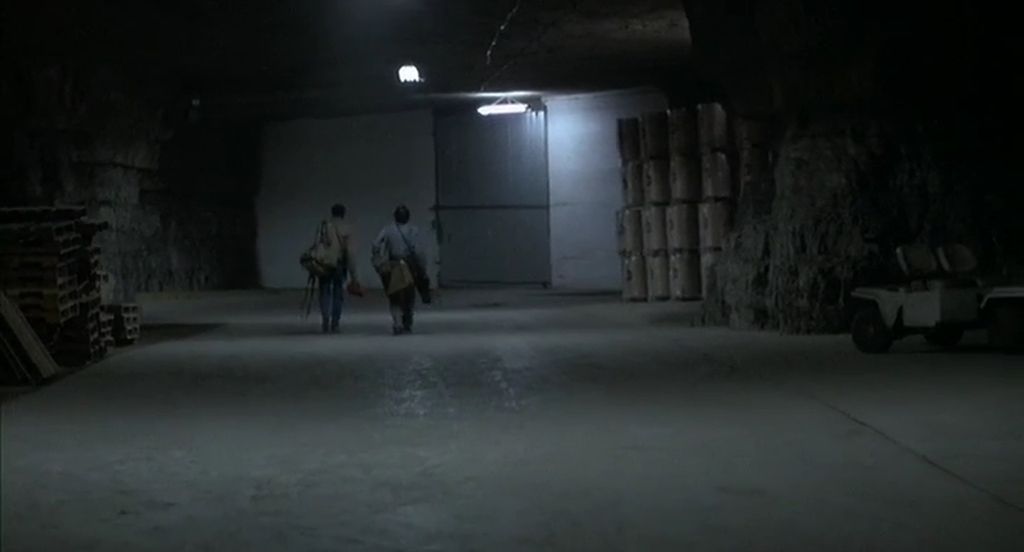
The Seminole Storage Facility

All this is not to say Day is a bad film, or a deficient work of horror. In fact, Day of the Dead might be one of the purest horror movies ever made, in terms of fealty to the concept. From its opening on the ruined streets of a Florida town, to the surreal underground base the survivors return to when their search for other living humans is again unsuccessful, the sense of fear is close and always growing closer.

Day is also the movie with the best characterization and the strongest acting, by a wide margin. The humans of Romero's zombie films are always trying to remember the lives they used to have, and by Day those memories are so faded that little remains of social structure. The Seminole Storage Facility is inhabited by a research team trying to get to the bottom of the causes and mechanism of zombism, accompanied by a military team that's supposed to assist and guard them (Perhaps someone listened to Millard Rausch after all). They were placed there in a hurry under orders from Washington, but their radio communications have broken down, a number of people have died, and throughout the movie there is never any evidence that any other humans are alive anywhere.
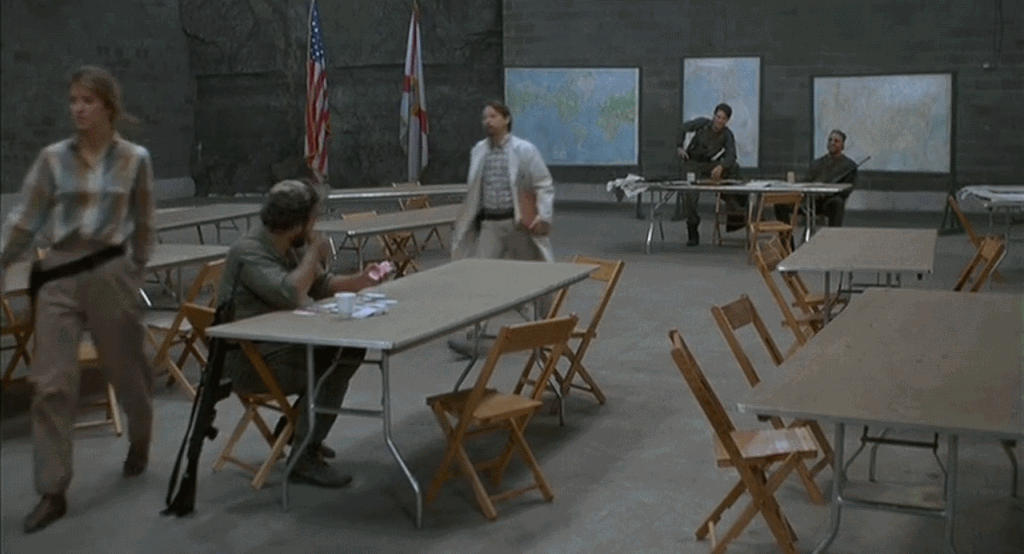
Sarah (far left) storms away from Captain Rhodes (standing at table)

It's the most recent death, at the beginning of the movie, that ends up destroying the group. Major Cooper, the military leader, has died, and authority has passed to a man named Captain Rhodes. The field researchers, led by Sarah (Lori Cardille) return from a fruitless helicopter trip to a dead city to find a new marker in their makeshift graveyard. They then ride a massive utility elevator into the ground, and it's the last we see of the sun for a very, very long time.

Captain Rhodes is played by Joseph Pilato, which (if I'm not mistaken) makes him the only person in the classic Dead trilogy to appear more than once as something other than a zombie. He'd previously appeared in a very brief sequence as a dock guard in Dawn. (If you're watching the movies: Not the guy who asks if anybody has any cigarettes. The other one.) He wastes no time taking charge, immediately making the scientific team (Sarah and Dr. Fisher, played by John Amplas) worry about the future.

Their third half, however, is blissfully ignorant of trouble. Richard Liberty plays Dr. Logan, who is known as "Frankenstein" among the military personnel. He spends his time holed up in his laboratory doing grim research on the undead. Romero's movies dance around an explanation for the zombie plague, but basically: If you get bitten, you die. If you die (bitten or otherwise), you come back. Only destruction of the brain will actually kill a zombie for good. So when we see Dr. Logan arm-deep in an undead cadaver's torso, it's deeply disconcerting, but there's never any indication he'll get infected.

Sarah, with Bub in the background

Sarah, Rhodes and Logan are all creations in existing Romero patterns, but they're also the best of their types. Sarah is a strong woman who nevertheless has realistic emotions and weaknesses, a more evolved form of Frannie. She has nothing of Barbara's hysterical tendencies (even if Barbara was neither the only female character in Night nor ever quite as incompetent as she's come to be seen). Romero says in the commentary for Day that Sarah was a continuing apology of sorts for Barbara, and the apology feels sincere.

Rhodes is probably the single best-defined character in any Romero zombie film, and Pilato plays his grandstanding authoritarianism with gusto. He's an elevated form of Wooley from Dawn and Cooper from Night - the man who feels he should be in control of the situation, but isn't. Something subtle enough that it only becomes clear through multiple viewings is that Rhodes doesn't know what to do with his power. He knows how to make people afraid of him, but not how to lead. This deficiency, which he seems to sense indirectly, only makes him angrier.
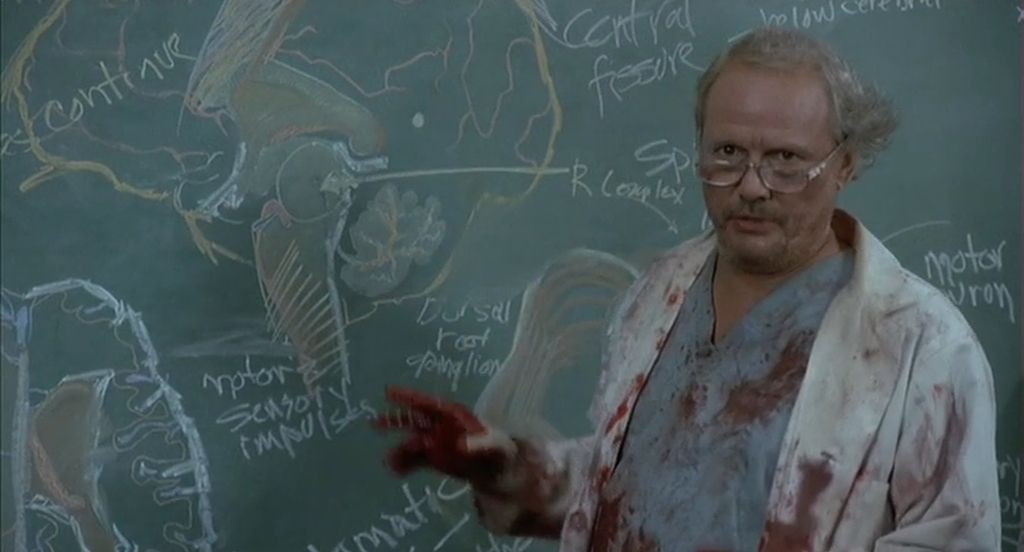
Doctor Logan

Dr. Logan represents a third archetype, the dangerously deluded, with a lineage descending from Barbara and half a dozen peripheral characters in Dawn. He is so unaware of the danger Rhodes presents that he is also the only person who will stand up to him. Rhodes is an annoyance, not a threat, and in a really fantastic confrontation perhaps halfway through, Logan cracks just a little, and we get to see how tenuous his grip on sanity really is.

Logan's character is the first one in the series to produce some definitive results on the undead, and the implications of his findings are fascinating, even if the stakes are low at this point (the people who tasked him with this research are almost certainly dead by now). Decay in the undead is slowed but not stopped, and he believes (it's never clear what his calculations were) that they outnumber the living by 400,000 to 1. The dead are also trainable, as he shows off in his prize specimen, Bub, who is basically a pet.

The state of the state of Florida
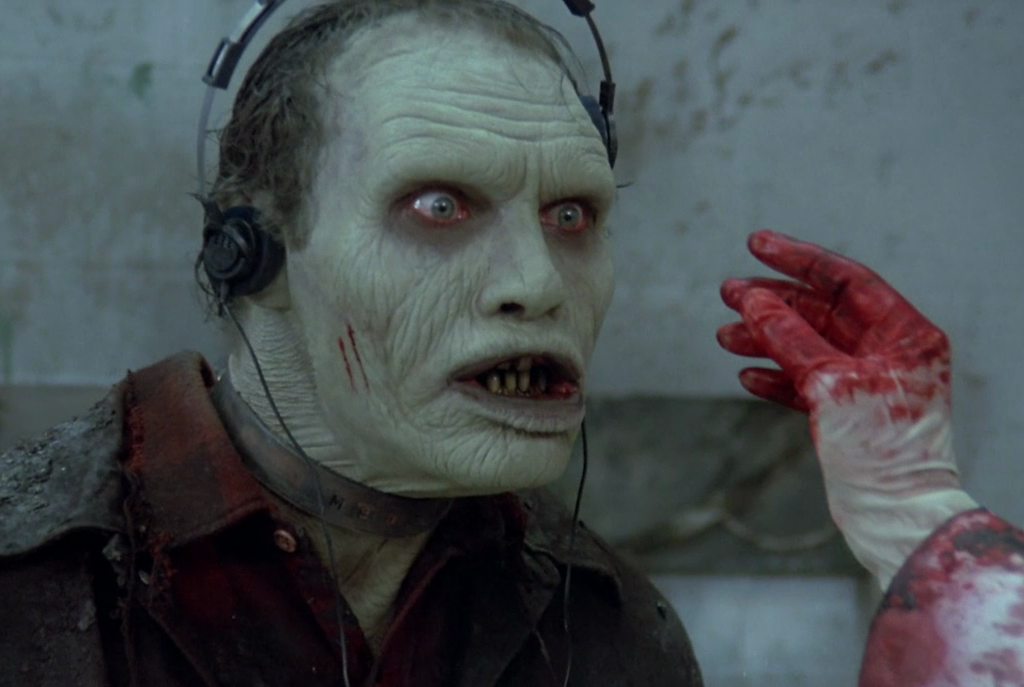
The zombies in Day are the first to look genuinely inhuman, with extensive decay, better injury prosthetics and the subtle removal of eyebrows all contributing to a genuine ghoulishness. Bub (Sherman Howard) is the first zombie in the film since Hinzman to get substantial dedicated screen time, and Howard manages to do a lot with such a limited role. It's possible he did too much: Romero would return to the theme of zombie intelligence in his next Dead film, Land of the Dead, with markedly diminished results.

Dr. Logan gets Bub's attention

Day plays out over several days, as opposed to about 12 hours for Night and several months for Dawn, but feels the most tightly plotted. The rapid deterioration of what might well be the last human society unfolds at a breakneck pace, emphasizing the claustrophobia all the more.

The end of Day feels definitive, if not entirely satisfying. Without getting into spoilers, it ends up underscoring the same conclusions at the end of Dawn, a far more enjoyable, if less technically proficient, film. And, for another 20 years, that was the end of the Dead movies. Then zombies came back and, with them, Romero.

If you liked Day of the Dead, try....
  • Most zombie stories seem to start out at this stage, neatly skipping over the fall of humanity to concentrate on scavengers fighting zombies in a dead world. Heretical as it must sound, I don't really find this part that interesting, and can't give any strong recommendations. The Walking Dead - both the comics and the TV show - take place here, and are probably the most popular work in the Day stage of the zombie cycle.
  • 28 Days Later (2002) is a fantastic film set in a Day-style London. It doesn't quite count, though, since the second half of the film deals with the survivors' hopes that civilization has survived outside of the plague that has decimated the United Kingdom.
  • The original script is definitely worth a read, if you liked the movie. It differs from the finished product far more than the Dawn script does. Romero ended up having to rewrite it when the budget he was asking for ($7 million) got cut in half. The finished movie is far tighter, both thematically and structurally, than the dystopian compound he'd imagined. Had it been shot as written, Day of the Dead would have looked a lot like the later Mad Max films, with such bizarre sights as (poorly) trained zombies and a prison camp for those deemed unworthy by the government. Most, if not all, of the characters in the finished movie appear in this version of the script, but often in notably different forms.
  • The Left 4 Dead games are pretty great, but when the best tie-in material you can recommend for a film is a first-person shooter, the movie has problems.

Later works (2005 - 2009)

If Day ended up repeating Dawn, Land of the Dead (2005) ended up repeating Day, although somewhat more literally. Romero was never able to get the funding he needed to produce his original script for Day (linked above); the finished film was substantially scaled back. When the zombie market opened back up again in 2004 with Shaun of the Dead and the novel World War Z, Romero got a chance to go home.

It would be nice to say Land of the Dead was a return to form, but it isn't. Something about the slickness of big money didn't go with the bootstrap nature of Romero's best works, and on top of that corners were cut in weird places (CGI fire, ugh). Still, even if it had been great, nothing could have changed the fact that little about Land makes sense.
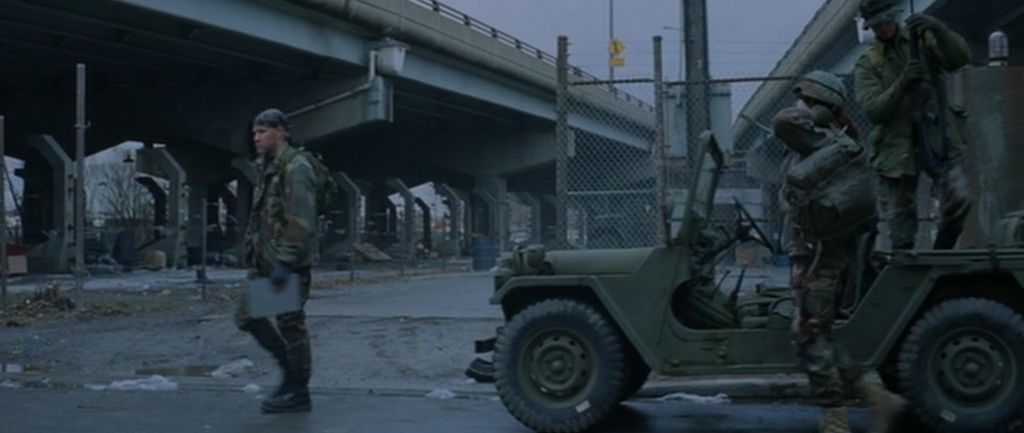
The human compound in Land of the Dead

There's almost no continuity skip between Dawn and Day; the ruined cars we see scattering the roads are almost all models that would have been present if the world had indeed ended in 1978, and clues pretty much dry up there (an exception is the presence of a more recent Stephen King novel). Land is set far enough after Dawn that the young men and women in the survivors' compound only vaguely remember the apocalypse as something that happened when they were children; it wouldn't have been too hard to stick with the 1978 aesthetic. Except they don't; now it looks like the world ended in 1995.

The film is set at a large, fenced-in enclosure surrounding a residential complex known as Fiddler's Green. This location has none of the surrealism of living in a mineshaft or a shopping mall, and instead the film often looks like a portrait of inner-city homelessness (with zombies). Romero's scripts are rarely strong enough to stand on their own; there needs to be an element of unreality to sell the dream-logic of the events. Night accomplishes this with black and white film; Dawn and Day do it with location. Land just looks grimy.

Land makes an additional mistake in being about the zombies themselves. The trick to Night and Dawn is that they aren't actually about the zombies, they're about people's reaction to the zombies (something Romero says himself in Birth of the Living Dead). Day started to separate from that by focusing on Dr. Logan's "trained" zombie, Bub. That doesn't actually subvert Romero's original goal, though, so much as cloak it: Dr. Logan is revealed by degrees to be a man going out of his mind, and Bub is the focal point of this.
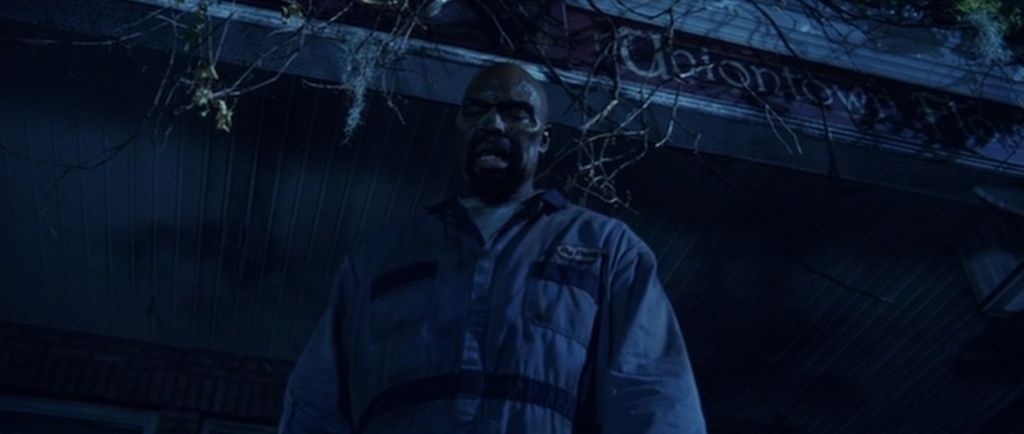
Big Daddy

This trend of shifting interest leads us to Big Daddy, the zombie character who vies with actor Dennis Hopper (playing an exceptionally generic bad guy) for being the most interesting part of a very uninspired movie. Big Daddy (Eugene Clark) is this movie's major black character. Romero's decision to make race a running theme in the series is one of the few few aspects of the films that got steadily better as the films went on, but that stopped here.

At first blush, the idea of making a lead zombie a minority seems like the most intriguing kind of dangerous idea. Give it 30 seconds, though, and there's a good chance you'll question it. Why are we supposed to sympathize with the zombies? Are we supposed to sympathize with the zombies? And why are they getting smarter? What's going on here?

Land of the Dead never really answers these questions. Aside from how the zombie populace is now markedly more intelligent, Land feels in every way like a revisit of Day with all the tension stripped out. The human protagonists are members of a security force guarding a compound where a microcosm of everything wrong with America has been allowed to persist. The intense social stratification offers up a lot of good opportunities for commentary that simply never happen. Romero's political edge is gone; the best he offers up is a scene where the humans distract the zombies with fireworks while they raid a deserted store. The zombies are too mesmerized by the bright lights to notice the survivors.
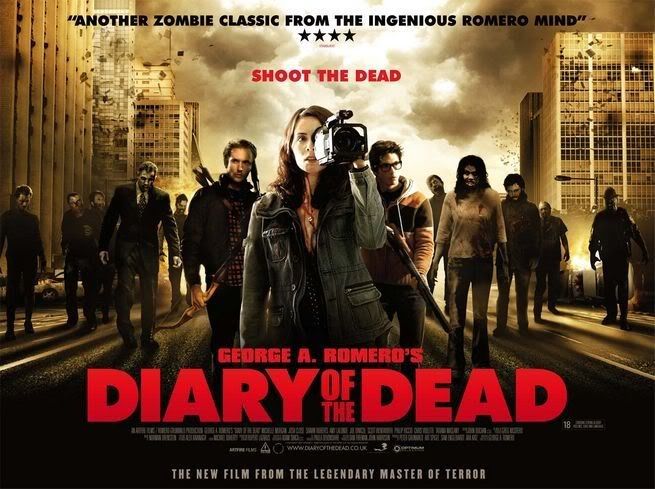

Diary of the Dead (2007) is, quite simply, a mess. Romero winds back the clock to the beginning of the zombie outbreak, only to discover that he has nothing important to say anymore. The structure of the film manages to be dead linear and inexplicably confusing at the same time. The plot puts Romero squarely in the role of "cool grandpa" who knows how important social media is to his college-aged protagonists. He puts so much thought into this (as well as making the zombie deaths memorable) that there's no time left to make sure the story works.

Rewatching the movie with the director commentary on and listening to Romero point out how he wanted to show stuff like the actual uploading of a video just made me sad. Romero always had two contradictory strengths: Attention to detail, and the ability to say interesting things bluntly. In Diary, attention to detail won out.

There is a third 21st century zombie film - Survival of the Dead (2009) - but I haven't seen it, and probably won't anytime soon. The reviews were almost universally negative, and after Diary I didn't want to subject myself to more of the same torture.

Instead, I decided to subject myself to a different kind of torture, where I tracked down some of Romero's more obscure movies and watched those instead. They'll form the basis for a companion piece to this article, "The Non-Zombie Films of George A. Romero."

Monday, January 12, 2015

Review: The Magic Voyage

Here's the second of two movie reviews I wrote in 2012 but haven't published until now.

The Magic Voyage


Dom DeLuise is the voice of Christopher Columbus in a retelling of his voyage to the New World in which he is best friends with a talking woodworm voiced by Corey Feldman. Yes. That is a thing that happened, and evidence of it still exists in this realm.

Director: Michael Schoemann, 1992

I am a member of the second and final generation to grow up with stores that rented videos. Once a week, we'd go down to the local tape rental and I would select a movie based on what the back of the cardboard sleeve said. In retrospect, most of what I saw was crap, and I simply didn't have enough experience to recognize the difference between good and bad. I don't even remember the names of most of the movies, but when I recognized one of them at the thrift shop, I decided to compare past and present impressions.

Sure, he's mad now, but his hair appears to be clapping, and how long can a man with clapping hair stay mad at anything?

"The Magic Voyage" is a partially singing, crudely animated, not-quite-all-star cast interpretation of Christopher Columbus' trip to the New World. That it takes liberties with the story is to be expected, because a children's story needs good guys and bad guys, not a bunch of pro-and-con arguments about how one guy might have totally ended up ruining two whole continents for everyone who was already living there. History is complicated. Cartoons are not. Thus, "The Magic Voyage" presents Columbus as an affable stooge who believes the world is a cube. He is voiced by Dom DeLuise. He is the Columbus we deserve.

The movie opens with a bunch of seagulls fighting over a fish in a port, interfering with a dock worker and causing him to drop a crate full of books. Out of one of the books comes our protagonist, Pico the Woodworm, who shoulders a tiny bindlestick and sings to the fourth wall about how he used to be a bookworm. He's then set upon by one of the seagulls and escapes up a mooring line to a ship. Here we encounter Christopher Columbus, angrily consulting his charts and oddly shaped globes before throwing them out the window. He mournfully consults the last one, the cube, before Pico introduces himself by chewing all the corners off of it, making it sort of a sphere.

The two immediately form the sort of classic man-xylophage friendship that inevitably leads to a shared musical number.

So, time to take stock. It's just over six minutes into the film and we've been introduced to square-Earth-Columbus by narrator Mickey Rooney, who never returns; we've watched a singing woodworm outwit a seagull by drilling through its beak; and we've heard Dom DeLuise say "My mappa, she sure stinka." Gird your loins. There are 76 more minutes of this.

When I was a kid, I'm not sure I ever saw a cartoon I actually disliked, but the flip side of that coin is that I got too lost in bright colors to actually appreciate quality. In other words, I - and God knows how many other children who are now old enough to drive, vote, and take out crushing student loans - liked seeing animation so much we didn't register any of the aspects that make it good or bad.

Pictured: Bright colors. Not pictured: Squash and stretch. Bonus: The woman in green is actually gyrating pretty quickly for no apparent reason.

For instance, one of the tenets of good animation is "squash and stretch," often summed up in as an animated loop of a bouncing ball. When the ball hits the floor, it deforms on impact before popping back up and resuming its original shape. The technique of squash and stretch is key to making things that change shape look realistic, and "The Magic Voyage" does not have this. The finished project has lines with all the squash and stretch of overcooked spaghetti, causing faces to billow and collapse and bodies to twitch and shuffle. On the plus side, Corey Feldman is a talking woodworm who does his own singing.

Columbus did not pay for that pie.

Columbus and Pico drive to the castle in town, where they plan to shop Columbus' ideas on navigation to King Ferdinand. In doing so, they (and passers-by) share in a musical number where the refrain is "All because I met a fella like you," which sounds like something a down-on-his-luck Tarantino villain would say while spitting blood.

They then arrive at the hall of inventors just in time to watch King Ferdinand and his henchman, Stupedo, throw a man in a flying machine out the window. He is saved from certain death by landing in a tree on the way down, but the other inventors are spooked enough to run away, leaving only Columbus.

I'm sure this is completely historically accurate.

Ferdinand doesn't take well to Columbus or his chewed-up globe, but the incredibly hammered Queen Isabella does. They are voiced by Dan Haggerty and Samantha Eggar, who sound like they're in a sporting contest to see who can be more ridiculous. Columbus gets invited to eat dinner with them. Isabella fawns all over him to the point that Pico gets disgusted and leaves, while Ferdinand sits at the other end of the table and breathes angrily through his mouth. It's a hard thing to watch your wife, who already looks like a partially deflated blow-up doll, hit on a man with a child's-coffin-shaped head.

Outside, Pico climbs up a tower with a light in the window, where he meets Marilyn the fairy (or "firefly," as the tape case insists), who tells him her tragic story. She was originally from the land of Terrible Analog Effects, where all the firefly-fairies live, but was kidnapped by the Swarm. The Swarm is a huge swirling cloud of insects that wanted the firefly-fairy magic for itself, and didn't believe Marilyn when she said it couldn't be used for evil. So she's locked in this tower.

 Trying to drive here at night is hell.

Marilyn is voiced by Irene Cara. If you don't know her by name, she's the singer of "What a Feeling," which she also co-wrote, from "Flashdance." In case you were wondering what happened to the refugees of the 1980s once all the leg warmers were buried, now you know. Pico naturally wants to help her escape, but he only succeeds in alerting the Swarm to his presence, and Marilyn is spirited away across the ocean. Well, damn.

Fortunately, King Ferdinand gives Columbus some ships to be rid of him and the next day they're off. En route, Pico is attacked by some ship rats (formerly harbor rats his got to leave him alone there by telling them there was food on the ships) and Columbus' crew finds out he's friends with a woodworm and starts to turn on him.

This picture gets even better if you try to imagine Dom DeLouise singing "Down with the Sickness." Seriously, just take a minute and try that.

Columbus then breaks out his accordion and tries to whip the crew into a not-killing frenzy with a song about seamanship. It is easily the best song in the movie. Consider this sample from the chorus:

Oh,
The life of the sea is the life for me,
No lovers of land are we;
La la la la, la la la la,
La la la la la la

I wish I could say that the crew strung him up right then and there ("The Magic Voyage" has a LOT of strangling and strangling-type violence), but the tune actually placates them long enough for Columbus to turn in for the night. No, what actually prompts the crew to drag him out of bed and hang him is the sight of a derelict Viking longboat manned by skeletons. As they're hauling him up, Columbus spots land off in the distance and tries to tell them, but they don't listen. And it is at this point that the Swarm attacks.

This Swarm, here.

The Swarm is really the only part of this movie that held up to the expectations of my eight-year-old self. The idea of a cloud of insects that can think and act as one, as well as use the voice of Dan Haggerty, is objectively terrifying. Smile all you want from your black and white headshot on the back of the tape sleeve, Haggerty, but you are the voice of childhood terror. And also King Ferdinand, from earlier, but mostly childhood terror.

All the animation problems that undermine the rest of the film actually make the Swarm look that much more fearsome. Wobbliness and the whole squash-stretch problem look, if anything, appropriate in a huge cloud of flying insects. It shape-shifts from one pissed-off form to another as it attacks them, a huge cloud of angry, angry pencil scribbles. It's like some kind of childhood entertainment elemental, as though the medium of animation had summoned a champion to cull its own ranks.

"Well, that's animation school, folks. You can all go as soon as you can draw yourselves diplomas freehand."

As the swarm departs, having thoroughly trounced the crew, the ship abruptly runs aground. Columbus originally had three ships when he left Spain, but now we're somehow down to one. Columbus, wearing only his boxers and the noose, lasts long enough to plant the flag for Spain on the beach before passing out.

In a nearby Mesoamerican pyramid, the Swarm wakes Marilyn from her prisoner's sleep inside a solid gold idol to tell her that Pico is dead. Pico is not actually dead, although he is floating face-down in a puddle on the beach. There he is rescued by the last and most ridiculous major character, Bob the Beaver, whose house the ship ran over.

Bob meets up with Pico, who he drags out of the puddle, and the two remaining rats. As the rats pull themselves free from the wreckage, one comments to the other that the third one was knocked out cold. (They do have names, but their weird voices prevented me from understanding them.) This point always intrigued me: Did the guy who voiced the third rat die or quit the movie halfway through voice recording or something? I suppose I may never know.

"Well, the last thing I remember is throwing the stereo into the pool."

Those of you who know virtually anything about North American wildlife probably just asked yourselves why you've never seen a beaver in a documentary about tropical wildlife, and the answer is, of course, that they don't actually live quite that far south. And that would be the end of it, except that this is the one thing in the entire movie that they actually tried to explain. Not the loss of the other two ships, or why the king and queen of Spain were living on the coast when the capital city at the time was 200 miles inland in every direction. No, one of the rats asks Bob what he's doing here, and he explains that he was working on a dam that collapsed, and he woke up here. Sure.

Bob, Pico and the two rats march off into the jungle towards the temple. Columbus expresses fear of whatever "jungly-wungly things" might be out there, but, after looking over his shoulder for the requisite forest-full-of-eyes shot, runs after them.

There's something about this picture that really just sums up the entire Internet for me. For truly, are we not all climbing giant honeycombs in our boxers?

When they finally make it inside the temple they encounter a huge honeycomb, with the Swarm swirling around the top of it, guarding Marilyn and the idol. Columbus, blind with gold-lust, clambers up the side of the comb while Bob chews through the bottom. Pico drills up through to rescue Marilyn.

Having reached the top, Columbus sticks his hand into the Swarm but yanks it back, thinking for a moment that his fingertips are gone before remembering to unfold his hand. (The problem with this gag has always been that you can't fool both the character and the viewer with it; only one of them is going to see it from the proper perspective.) So he whips up a rag puppet out of the tattered Spanish flag he's been wearing as a cape, gives it a pep talk, and sticks it into the Swarm, which is moving so fast that the puppet catches fire.

Columbus battles the Swarm (mostly by dodging and being strangled) while Pico and Marilyn escape and Bob chews the rest of the way through the bottom of the honeycomb. The whole thing collapses, bringing Columbus and the idol down on the Swarm, smushing it flat.

Still less racist than Disney's "Peter Pan."
 
Then the temple collapses too, because why not, and the protagonists ride a nearby river to safety. They encounter some natives... who are actually grateful to Columbus for squishing the Swarm. They allow him to keep the golden idol, and everyone is happy.

There are a few additional points of context that should be shared. "The Magic Voyage" was originally released in German. Lord only knows what their versions of the musical numbers were like. I like to think it was all done by Rammstein.

 "Du hast?"

Additionally, "The Magic Voyage" was, according to the IMDb, the most expensive animated film ever made in Germany at the time, costing $14.5 million. That's the perfect opening for more jabs at the production values, but I think I've made my point and can ease up. Truthfully, the character designs, however poorly executed in the animation, are quite good, and the quality of the backgrounds is as good as anything from the classic age of Disney, which was no doubt the intent.

In fact, everything about this movie suggests that a group of people watched a whole lot of Disney without understanding any of it, from the poorly spaced musical numbers to the excessive use of talking animals. Only the idea of an angry cloud of insects that otherwise possesses the standard characteristics of a kids' movie villain is something that is completely unique. It will likely remain that way until Michael Crichton's "Prey" is adapted for film.

Monday, August 11, 2014

The Death of Robin Williams

The following was originally posted on ourworld.katbox.net.

As I am uploading this, it is still less than six hours since I learned of the death of Robin Williams, who died earlier today of what the news is saying is an apparent suicide. It's very hard for me to accept that someone who's life's work was making other people laugh was so eaten inside that he felt he had to do this. He leaves behind friends and family and a magnificent body of work and a shaken world that never thought it would end this way.

I know many people who suffer from depression, and I suffer from it myself. I also know that many people who do not suffer from depression conflate it with ungratefulness - they perceive an inability to be happy as a person's refusal to be happy. Without knowing the details of his life, I wonder if this made it harder for Robin - to be so successful in so many ways and still hurt inside.

If you or someone you care for has depression, please be kind - to them and to yourself. Depression is an illness, and people are not made lesser for having illnesses. I believe that this will be a hard night for many of us, but if there is a message to be taken from this event, let it be that we must always let those around us know that they are loved.

Thursday, January 31, 2013

"Robin Hood" and the Advent of Furry Fandom

Stuck without Internet for two and a half days, my wife and I ended up rooting through our movie collection for entertainment. We watched three movies from our childhoods - Anastasia, Robin Hood and Mulan. Mixed in with my realizations that Eddie Murphy used to be really funny and Christopher Lloyd makes an awesome Rasputin was the thought that Robin Hood might have consolidated most, if not all, aspects of furriness.

This carries significance to me as the writing half of an anthro webcomic. Neither Kuurion nor I are entirely on board with the idea that what we're doing is "furry," exactly - the term carries connotations that we don't completely associate with - but it's something we resort to as shorthand. Both "anthro comic" and "furry" are in Our World's HTML fields, and I don't think any search engine has used those things since AltaVista.

Robin Hood predates all but the most primordial aspects of furry fandom, and as such I think it had an unrecognized yet simultaneously outsized influence on the shape of things to come. First, though, some context.

PRODUCTION BACKGROUND


After Walt Disney died in 1966, the movies bearing his name went into a qualitative slump that lasted for more than two decades. The Onion's A.V. Club has an excellent review of the first movie made without him, "The Aristocats," which it describes as the beginning of the company's dark age. "Robin Hood" is the movie they made after that, allowing them to reuse footage. Here, watch:


My thanks to whomever made that video, which is honestly still best viewed on a screen not larger than a stamp. Still, the quality is good enough to tell the tale: That dance sequence was cobbled together from three different movies (the other two being Walt's last and first films, "The Jungle Book" and "Snow White.") The knowledgeable among you may have also remembered that Phil Harris, the voice of Little John (who sings "The Phony King of England") is also the voice of Baloo the bear from "The Jungle Book."
 
"If ever an entertainer was born to be a Disney character, it's Phil Harris," writes Noel Murray in that "Aristocats" review you still haven't read, and he makes a fair point. Harris just sounds so much like a Disney character. So much, in fact, that they reused him in all three of those films. In the "Aristocats" his made-for-AM radio voice works because he plays an alley cat (the refined female lead was Zha Zha Gabor), and it's pretty much the same case with "The Jungle Book."

Here, however, he plays the unwitting lead of an entire faction of people who, in 14th century England, have country accents.

Click on that to see the full-size version. If you haven't seen the movie: Yes, they actually have cards at the beginning explaining who the people are and what they're supposed to be. We're almost to the furry bit, but it's worth going through this because it's just so weird. Clockwise, from top left: Robin Hood (Brian Bedford, British); Maid Marian (Monica Evans, British); Sir Hiss (Terry Thomas, hissy); Lady Kluck (Carole Shelley, Scottish); Alan-a-Dale (Roger Miller, country); The Sheriff of Nottingham (Pat Buttram, country); Friar Tuck (Andy Devine, country); and Prince John, (Peter Ustinov, British). So, of the nine main characters in that picture (which I got from Fanpop; thanks, Fanpop, for compiling all those pictures into a grid) we have four who actually sound like they're from the United Kingdom, three who sound like they're from the Deep South, and one guy who talks like a snake because he's a snake.

Setting Sir Hiss aside, that's still half the major cast being from a wildly different time and place. Pat Buttram is Mr. Haney from "Green Acres," for God's sake, and Roger Miller is the guy who sings "King of the Road." None of this was ever given any contextualization, either. It's just a thing that Disney did, in addition to plundering their other films for footage. So how did this slap-dash collage become the place where the basic tropes of furriness first unified? Truthfully, from what I can tell, this was largely an accident, as the Wikipedia page can explain:

"Initially, the studio considered a movie about Reynard the Fox. However, due to Walt Disney's concern that Reynard was an unsuitable choice for a hero, Ken Anderson used many elements from it in Robin Hood.

"Robin Allan writes in his book Walt Disney and Europe that 'Ken Anderson wept when he saw how his character concepts had been processed into stereotypes for the animation on Robin Hood.'"
So that's where it started. Walt decided that Reynard the Fox wasn't Disney material and the concept art was reprocessed into something else.

CONTEXT


Disney is a cultural-economic monolith. Each of their animated features is conspicuously numbered, indicating the importance that each commands. Even if "Robin Hood" isn't the first Disney animated feature most people would name if pressed for a list, it would probably come up once they're past "The Lion King" and all the princess movies. Probably after "101 Dalmations" but before "Oliver and Company," but I'm only speculating.

As a Disney movie, "Robin Hood" will never go away. It's something each generation of American youth is routinely exposed to, like Playmobil people and chicken pox. People grow up, have kids, and reach for all the same things that they had when they were children. And some of those kids grow up to be furries. But why?

WikiFur (the furry wiki encyclopedia, as you probably guessed) says that furry fandom was born when the old "funny animal" genre expanded out of comedy and into drama. (Taking an additional step back, the original funny animal cartoons probably owe something in their popularity to the fact that furries are easier to draw than humans.)

"Robin Hood" is, in my mind, the first time anthropomorphic animals had been used visually in a dramatic situation, and every one of those points is necessary to the genesis of the fandom. The WikiFur "History" page linked above (and here) lists a number of works considered groundbreaking on the road to furdom, and "Robin Hood" is the first to meet all of them. While many other works contain multiple dimensions of furriness ("Kimba the White Lion" actually made it stateside several years earlier, and I only discount it because the characters aren't truly anthropomorphic), "Robin Hood" was the first to put them all together. The closest thing previous is this:

It's almost drama ("Well, what did you expect in an opera? A happy ending?"), it's visual, and it's anthro. But it's not really furry. Not even with the it's-awkward-but-we're-laughing sexuality that evokes virtually everything non-furries seem to think of furries. It also isn't actually a story, it's a parody of a story, existing exclusively as a mocking shadow of its subject. "Robin Hood" was more ambitious than that, although truth be told, "What's Opera, Doc?" might well be the better cartoon. After seven decades of sight gags, the funny animals finally got a chance to be something other than funny in "Robin Hood." The spectre of death is very real here, going against the keystone tenet that cartoons can't die, and the characters are shown with (generally) realistic emotions.

King John, the "Phony King of England" from the song, is, for instance, shown as a thumbsucking mama's boy trying desperately to overcome his own inadequacies through wanton brutality. That's not a three-dimensional character, but it's at least two-dimensional - earlier cartoon characters, like Daffy Duck, could only show frustration and fear. To move from frustration to overcompensation, and fear to self-conscious inadequacy, is akin (to switch analogies) to the step up from the three primary colors to the whole spectrum of secondary colors.

IMPACT


Ultimately my argument of significance is built entirely on circumstantial evidence, but I feel like it's pretty good circumstantial evidence. And the significance also extends to the way furries look. I'm too tired to upload any more pictures, but actually click on any of the ones I have. Compare Robin against Bugs Bunny up there. Bugs is lanky, with smooth fur. Robin looks more like an actual anthropomorphized version of the animal he is - his fur fluffs out in places, something that has gone on to be virtually universal in furry art.

But he looks more human than Bugs, too, and that's the last and biggest part of what it means to be furry. Furry fandom - and its detractors - are so distracted by the animal half of things that both sides forget that it's the humanity that people need to be able to relate to. The exception to this rule being the assignment of breasts. That's another, probably somehow longer, essay. For now, it's enough to say that the human element, while less visible, is not diminished.

The last visual component is also the first thing you see, even if you don't notice it anymore: Anthro characters wear clothes. Donald Duck, a true funny animal, doesn't wear pants. And while this has been a font of cultural ridicule for Donald, we also know he doesn't have anything to hide. He's just feathers down there, which is a great source of relief for me and God knows how many other people. But Maid Marian has slight secondary sexual characteristics, and her lady-in-waiting, Lady Kluck, has cleavage. These aren't animals anymore; they're naked under their clothes.

"Robin Hood" was the place where funny animals stopped having to be funny, but it's also the place where they stopped having to be all animal, too. TV Tropes, which has covered all this ground before, calls this evolution "Anthropomorphic Shift" but in this case the shift all took place prior to the start of the movie. "Robin Hood" made a story about humans and told it with animals - but, crucially, the animals are still largely human. And that, simply, is where everything finally came together.


Saturday, March 31, 2012

The Most Fascinating Bad Movie Ever Made

Parody is hard to do right, a fact complicated by the fact that it's often quite hard to tell when people in the genre are trying and when they aren't. For every "Airplane!" there are five "Scary Movies"; for every good Mel Brooks film there are three bad Mel Brooks films. Parody is hard to make appear intelligent and virtually never ages well. And that brings us to the morbid curiosity piece that is "Not Another Teen Movie."

First off, let's look at that movie poster. Click on it; it gets bigger. Movie titles started becoming logos sometime in the late 1970s or so, and in the time since there has never been one that looked less finished than this. The gradated colors of the block letters and the bad shadowing effects point to somebody taking skills learned in Microsoft Excel and transferring them to Corel PhotoPaint. Even if this was 2001/2002 (and it is; note the top billing for the VHS format), that's pretty bad.

The movie itself is a whole other can of twisted aircraft wreckage you pulled out of a swamp. See, although the bulk of what we think of as teen movies came out in the 1980s, the single most definitive entry ever made into the genre - "American Pie" - had come only two years before, although you can see the full list of references here. The amount of material in that list suggests that somebody with a misspent adulthood watched all of these movies, noted things worthy of parody and then built a script around them. The plot line follows this.

Leading lady Chyler Leigh plays Janey Briggs, which was basically the beginning and end of her in movies. Janey is the "pretty-ugly girl," who simply needs to take off her glasses and let down her ponytail to become gorgeous. Her father is crazed alcoholic Vietnam vet Randy Quaid, whose bizarre acting talents were never better used. Janey and her horny younger brother Mitch (Cody McMains) attend a school populated entirely by teen-movie stereotypes. Popular kid Jake (Chris Evans) accepts a bet by other popular kid Austin (Eric Christian Olsen) that he can make any girl prom queen. Janey is chosen.

Other plotlines swirl beneath the surface. Jake's insane pervert sister Amanda (Lacey Chabert) is trying to get him to sleep with her, and later makes out with the elderly undercover reporter who is somehow passing as a teen. Janey's brother and his friends are the stereotypical sex-crazed teens who pack for a crazy trip (that never leaves the neighborhood). Randy Quaid is still Randy Quaid.

Remember how I mentioned earlier that this was 2001/2002? The movie came out in December 2001, which means the home video release (on VHS, you guys!) would have been in 2002. But that also means that this is one of the small crop of films that were made before September 11, 2001 but released after it. Despite all the very real problems with Not Another Teen Movie, it can probably get a better reception now than when it came back. Goofy in a quintessentially American way, this couldn't have played particularly well to people who were sitting in theatres trying to remember what it meant to be American. Having adjusted over the ensuing decade, viewers can now appreciate the lack of quality with clear eyes.

What's really fascinating is that the people who made this film wanted - really, really wanted - for it to work. Ron Lester, the guy who played Reggie Ray, said on the DVD featurette (because there was a DVD featurette, and, God help me, I watched it) that he wanted to be the guy who played a parody of his own role as Billy Bob in "Varsity Blues." He's happy about it (something I suppose I would have never known if I'd bought the VHS copy).

This man's IMDb page shows that at the time, he had been in three feature movies and one of them was "Good Burger." But he wanted to make fun of himself. To continue focus on his character, there is a slot on the scoreboard in the school stadium that shows how many concussions Reggie Ray has left, and it grimly counts down as the movie goes on. There's nothing funny in that when you hear it explained, but seeing it happen you feel a sense of distant and morbid humor, and that humor is the life-giving ichor that stops this film from being totally unwatchable.

Grim one-upsmanship carries the movie like a robot carries an unconscious blonde in '50s horror - stoically, without emotion or the ability to register nuance. Remember the "Czechoslovakian" exchange student in "American Pie," who ends up being an unwitting accomplice in internet sex hijinks? Here they just have an exchange student named Areola, who is naked. All the time. Cerina Vincent, who played her, didn't sound anywhere near as happy as Ron Lester in the featurette. I believe she was entirely edited out of the film when it ran on television, which hopefully helped keep the people who had seen her here and the people who knew her as "the yellow Power Ranger" in separate camps.

I made fun of Mel Brooks at the beginning of this article because I recently rewatched "Robin Hood: Men in Tights," which was clearly made by a comedian at the bottom of his game. But how did that happen? He's a legend; he made "The Producers," "Young Frankenstein" and "Blazing Saddles." How did he sink to making a bad Robin Hood parody followed by an even worse Dracula parody? That last was starring Leslie Nielsen, who rose to maturity in serious roles before taking a permanent turn to comedy with - wait for it - "Airplane!" Why does comedy always seem to strangle those who love it most?